
Why Leadership Retreats Matter More Than Ever
Activities for leadership retreats help your team grow stronger, think smarter, and work better together. Whether you’re looking for icebreakers to build trust, strategic planning sessions to align your vision, or wellness activities to recharge your leaders, the right mix of retreat activities can transform how your team operates.
Top Activities for Leadership Retreats:
- Icebreakers – Human Bingo, personality assessments, and storytelling circles to build connection
- Strategic Planning – Goal-setting sessions, innovation labs, and scenario planning workshops
- Team Building Games – Scavenger hunts, escape rooms, murder mysteries, and problem-solving challenges
- Creative Exercises – Design sprints, AI simulations, and cross-functional collaboration sessions
- Wellness Activities – Nature walks, tech detox sessions, mindfulness practices, and recharge time
- Communication Builders – Minefield games, active listening exercises, and feedback sessions
- Purpose-Driven Work – Charity projects, values alignment activities, and mission moments
Most leaders know their teams need more than just another meeting. You need real connection, clear direction, and practical skills that stick after everyone goes home. A leadership retreat pulls your team out of daily chaos and gives you space to focus on what matters most.
The challenge? Picking activities that actually drive results instead of wasting everyone’s time.
Too many retreats fill the schedule with generic trust falls and boring PowerPoints. Leaders leave feeling inspired for a day or two, then nothing changes. That’s because the activities didn’t connect to real business goals or help people understand themselves and each other better.
Great activities for leadership retreats do three things:
- Build genuine trust and stronger relationships
- Sharpen critical leadership skills like communication and decision-making
- Create clear action plans your team can execute when they return
When you choose the right mix of activities, your retreat becomes more than a nice break from the office. It becomes a turning point that shifts how your team thinks, leads, and performs.
I’m Andrew Lamb, and over 25 years in senior leadership roles at companies like HP, I’ve seen what makes leadership retreats work—and what makes them flop. Through my work at 4 Leaf Performance, I help leaders design activities for leadership retreats that create fast alignment, clarity, and momentum using frameworks like WHY.os that cut through the noise.
Why Your Team Needs a Leadership Retreat
Running a business can feel like you are always putting out fires. You get stuck in the “daily chaos.” When you are busy answering emails and fixing problems, you don’t have time to think about the big picture. That is why taking a break for a retreat is so important.

A leadership retreat lets you step away. It is a special time to focus on how you work together. Here are a few reasons why your team needs one:
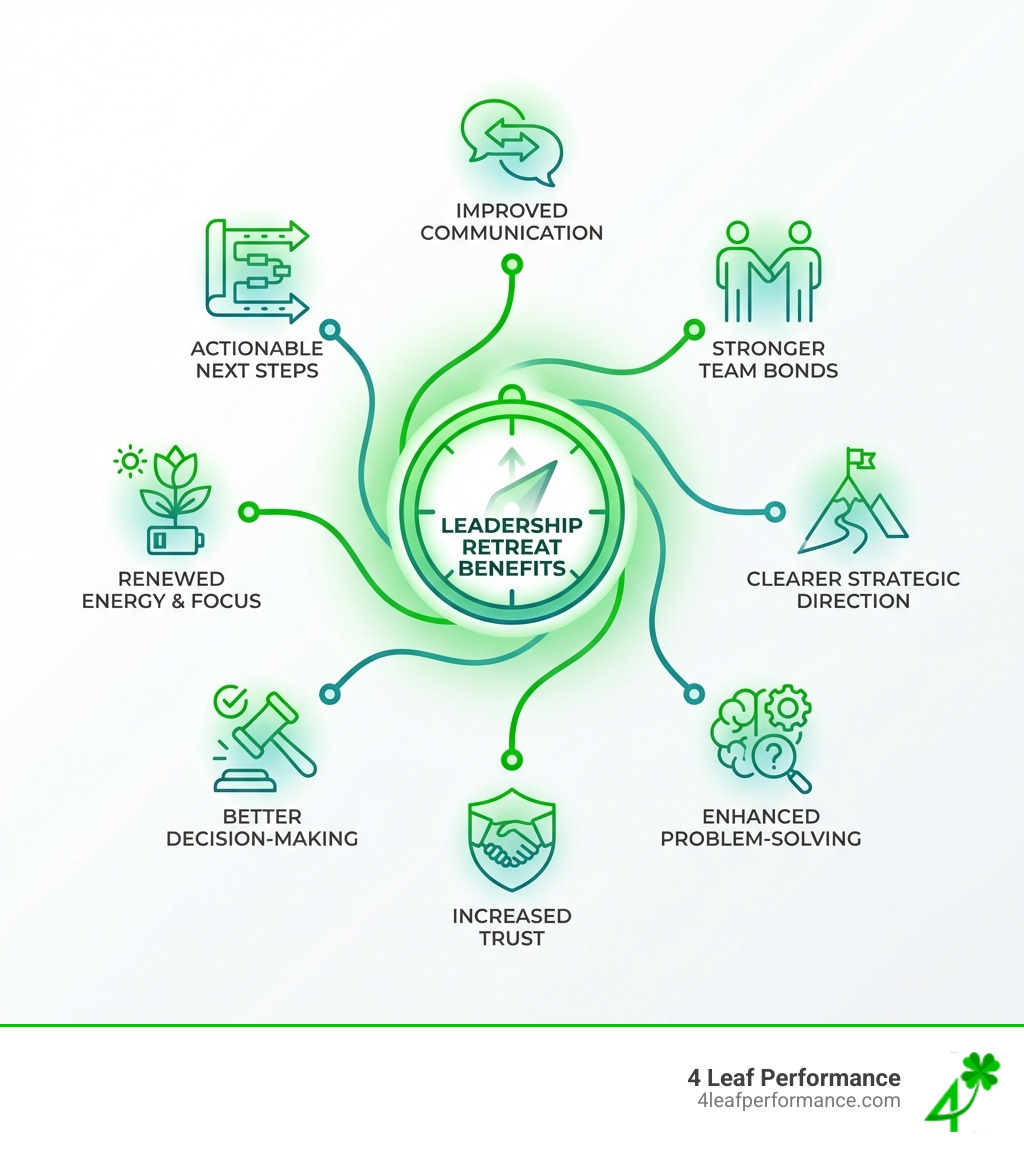
- Building Trust: It is hard to trust someone you only see in meetings. Retreats help you see the “human” side of your coworkers. When you trust each other, work gets easier.
- Setting Goals: A retreat is the perfect time to talk about where the company is going. You can stop guessing and start planning.
- Better Communication: Many problems at work happen because people don’t talk well. Retreats use games and talks to help everyone listen better.
- Boosting Morale: Everyone likes to feel special. A retreat shows your leaders that you care about them. It recharges their “batteries” so they can lead better.
At 4 Leaf Performance, we believe that leadership mindsets that fuel long-term success start with taking the time to reflect. If you just keep running without a plan, you will eventually burn out.
Fun Icebreakers to Start Your Retreat
The start of a retreat can be a little awkward. People might still be thinking about their to-do lists. You need to “break the ice” to get everyone relaxed and ready to talk.
Here are some fun activities for leadership retreats that help people connect:
- Human Bingo: Create a bingo card with facts like “Has run a marathon” or “Speaks three languages.” People have to walk around and find someone who matches the fact to mark their card.
- 2 Truths and a Lie: This is a classic! Each person tells three stories. Two are true, and one is a lie. The team has to guess which one is the lie. It’s a great way to learn funny secrets about your team.
- Personality Tests: We love using tools like WHY.OS or DISC. When you learn your “personality type,” you understand why you act the way you do. It helps you cultivate emotional intelligence because you start to see how others think, too.
- Storytelling Circles: Ask everyone to share a “Mission Moment.” This is a story about a time they felt really proud of the work they do. It reminds everyone why they show up every day.
Quick Activities for Leadership Retreats to Build Trust
Trust is the glue that holds a team together. If you don’t have trust, you have tension. You can use simple games to show how important trust is.
- The Minefield Game: This is a great way to practice verbal communication. You set up “mines” (like office chairs or cones) in a room. One person is blindfolded. Their partner must give them clear directions to walk through the minefield without hitting anything. It shows how much we rely on each other’s words.
- Marshmallow Tower: Give each small team some dry spaghetti, tape, string, and one marshmallow. They have 18 minutes to build the tallest tower that can hold the marshmallow on top. This game is about problem-solving and trying new ideas quickly. It shows that leaders need to be creative and work together to win.
Using these games helps turn tension into teamwork. You can read more about how great leaders turn tension into teamwork on our blog.
Strategic and Creative Activities for Leadership Retreats
Once everyone is relaxed, it is time to do some “big brain” work. These activities help your team solve hard problems and plan for the future.
- AI Simulations: This is a modern way to practice. You can use a tool like ChatGPT to pretend to be an upset customer or an employee who wants a raise. Leaders can practice what they would say and see how the AI responds. It is a safe way to practice hard talks.
- Design Sprints: This is a fast way to solve a big problem. In one day, you pick a problem, brainstorm ideas, and pick the best one to try. It teaches the team to make decisions quickly.
- Scenario Planning: Ask “What if?” What if a new competitor opens? What if we lose our biggest client? Planning for these things now means you won’t panic later.
| Activity Type | Best Location | Main Skill Developed |
|---|---|---|
| AI Simulations | Indoors | Communication & Tech |
| Design Sprints | Indoors | Fast Decision Making |
| Scenario Planning | Indoors/Outdoors | Strategic Thinking |
| Scavenger Hunts | Outdoors | Teamwork & Problem Solving |
| Nature Walks | Outdoors | Wellness & Reflection |
These activities for leadership retreats help you see your business differently. Instead of just reacting to things, you start leading with intention.
Team Building Games That Actually Work
We have all been to retreats with boring games. But team building doesn’t have to be “cringey.” It can be a lot of fun if you pick the right ones.
- Scavenger Hunts: This is not just for kids! You can give teams a list of things to find or photos to take. It gets people moving and working together under a time limit.
- Murder Mystery: This is like a giant game of Clue. Your team has to look at evidence and talk to “witnesses” to find out who did it. It is a fun way to practice logic and listening.
- Charity Projects: Doing good feels good. You can spend a few hours building bikes for kids or packing food for a shelter. This builds a strong bond because you are helping others together.
- Role Reversal: This is very powerful. Have a senior leader “swap jobs” with a newer manager for a game. It helps everyone understand the challenges other people face. It is a great way to practice leading by example and authentic leadership.
Outdoor Activities for Leadership Retreats and Wellness
Leaders are often tired. They work long hours and have a lot of stress. A retreat should be a time to “fill the tank” back up.
- Tech Detox: This is a big one. Ask everyone to put their phones in a basket for a few hours. Without the “ping” of emails, people actually talk to each other. It helps clear the mind.
- Nature Walks: Just being outside makes people feel better. A simple hike or a walk in a park can spark new ideas. Science says being in nature reduces stress!
- Wellness Sessions: You can bring in a teacher for yoga or meditation. Even just a 15-minute breathing exercise can help leaders feel calm and focused.
- Recharging: Don’t fill every second with work. Give people time to just sit, read, or nap. A rested leader is a much better leader.
How to Plan and Measure Your Retreat Success
A great retreat doesn’t just happen. You have to plan it. If you don’t have a plan, you might end up with a “vacation” that doesn’t help the business.
- Set Clear Goals: Before you pick your activities for leadership retreats, ask: “What do we want to change?” Do you need to fix communication? Do you need a new 5-year plan? Pick activities that match those goals.
- Make an Agenda: A good retreat has a mix of high-energy games and quiet talks. Start the morning with something fun. Do the hard strategy work before lunch. Use the afternoon for wellness and reflection.
- Create Action Items: Don’t leave the retreat without a “To-Do” list. Who is going to do what? When will it be done? This makes sure the good ideas actually happen.
- Follow-Up Surveys: A week after the retreat, ask everyone what they thought. What was the best part? What was a waste of time? This helps you make the next retreat even better.
One of the biggest mistakes is not following up. If you have a great talk but never mention it again, people will feel like the retreat was just a “show.” Use self-aware leadership to keep the momentum going.
Frequently Asked Questions about Leadership Retreats
What is the main goal of a leadership retreat?
The main goal is to step away from daily work to focus on the team and the future. It is about building trust, improving how you lead, and making a clear plan for the company. It’s a chance to stop working in the business and start working on the business.
How long should a leadership retreat last?
Most retreats are 1 to 3 days. A one-day retreat is good for quick goal-setting. A 2-3 day retreat is better if you want to build deep trust and really recharge. If it is too short, you can’t relax. If it is too long, people start worrying about the work they are missing.
How do you make a retreat fun and inclusive for everyone?
Pick a variety of activities! Not everyone likes physical games, and not everyone likes sitting in a circle talking about feelings. Mix it up. Also, make sure the location is easy for everyone to get to. Ask for food preferences and physical limits before you go so no one feels left out.
Conclusion
A leadership retreat is an investment in your team’s future. When you pick the right activities for leadership retreats, you are not just having fun—you are building a stronger, smarter business. You are moving from “chaos” to “clarity.”
At 4 Leaf Performance, we know that every leader is different. That is why we use the WHY.OS framework. It helps you find why you do what you do. When you know your “Why,” everything else becomes easier. We offer executive coaching and workshops to help you lead with intention and profit smarter.
Don’t let another year go by with long hours and tight margins. Start leading the business you always wanted.