Why Most Teams Are Still Struggling With Employee Engagement
Employee engagement solutions are tools, platforms, and strategies that help leaders measure, improve, and sustain how connected employees feel to their work and team.
Here are the top types of solutions to know about:
| Solution Type | Best For |
|---|---|
| Performance and feedback platforms | Mid-size teams that want better check-ins and goal tracking |
| Peer recognition tools | Teams that want more appreciation and real-time praise |
| Enterprise listening platforms | Large organizations that need broad feedback and reporting |
| Rewards-based recognition systems | Companies that want recognition tied to values and incentives |
| Lightweight engagement tools | Growing teams that want a simple way to gather feedback |
| Analytics-focused platforms | Leaders who want deeper reporting and trend tracking |
| Pulse survey tools | Teams that want regular check-ins and manager communication |
| Employee experience systems | Organizations tracking engagement, well-being, and inclusion together |
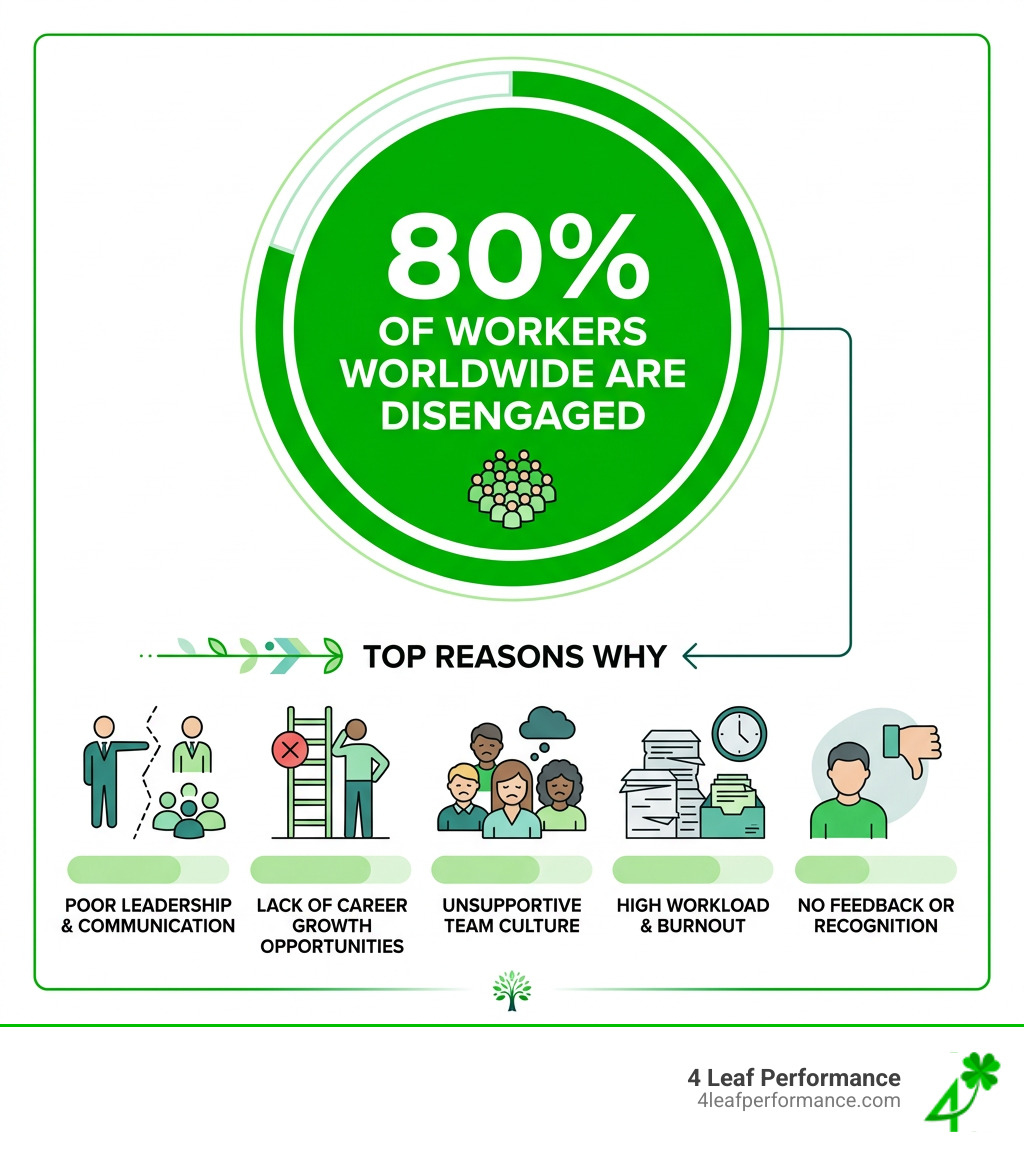
Here is the hard truth: nearly 80% of employees worldwide are still not engaged or are actively disengaged at work. That number has barely moved, even as companies pour more time and money into fixing it.
Why? Most engagement efforts get stuck. They get treated as an HR project instead of a leadership priority. Tools get picked before problems get defined. Surveys go out, results come back, and then… nothing happens.
If your team feels disconnected, unmotivated, or hard to align, you are not alone. And you do not need a complicated system to fix it.
This guide breaks down the best employee engagement solutions available today, what makes them work, and how to pick the right one for your team without the overwhelm.
I’m Andrew Lamb, a leadership advisor and executive coach with over 25 years of senior global leadership experience, including two decades at HP, where I saw how the right employee engagement solutions can either build momentum or quietly drain it. That experience shapes everything I share here, so you get practical insight, not just product lists.
Why Most Employee Engagement Strategies Fail

It is frustrating to spend money on a new tool only to see your team stay unhappy. Research shows that about 80% of workers are disengaged. This means they are just “showing up” but not really trying their best. Some are even “actively disengaged,” which means they are unhappy and spreading that bad mood to others.
Most strategies fail because they are treated like an “HR thing.” When the boss thinks engagement is only for the HR office, the team feels it. Successful programs need the leaders to own the plan. If the big bosses don’t care, the workers won’t either.
Another big problem is using misleading metrics. Sometimes, a company looks at “percent favorable” scores. These scores can look high, but they don’t tell the whole story. They might hide small groups of people who are very unhappy. We also see “action gaps.” This happens when a company asks for feedback in a survey but never changes anything. When workers speak up and nothing happens, they stop caring. Trust builds retention from the inside out, and you break that trust when you don’t follow through.
| Failed Plans | Winning Plans |
|---|---|
| Owned only by HR | Owned by all leaders |
| Too complicated to use | Simple and clear |
| No follow-up after surveys | Fast action on feedback |
| Focused on high scores | Focused on real change |
| One-size-fits-all | Fits the team’s needs |
What Makes Employee Engagement Programs Likely to Fail?
Programs often fail when they get too complicated. If a worker has to spend an hour answering questions every week, they will get annoyed. This is called “survey fatigue.” Overusing pulse surveys without taking action is a major “culture killer.”
You also have to watch out for spotting silent culture cracks. These are small problems that grow when leaders don’t pay attention. If the executive team doesn’t take responsibility, the program will just be a waste of time. Everyone from the CEO to the front-line manager must share the responsibility of keeping the team happy.
Key Features of Modern Employee Engagement Solutions
Today’s employee engagement solutions are much better than old paper tests. They use technology to make things fun and easy. Here are the must-have features you should look for:
- Pulse Surveys: These are short, quick check-ins. They help you know how the team feels right now, not how they felt six months ago.
- Peer Recognition: These tools let workers say “thank you” to each other. This builds a strong bond.
- Real-Time Feedback: You do not have to wait for a yearly review to talk about problems.
- AI Insights: New tools use AI to read comments and tell you if the team is feeling stressed or excited.
- Gamification: This makes engagement feel like a game with points and rewards.
When people feel like their work matters, they try harder. We know that purpose powers performance. If your software helps people see why their job is important, you will see a big change. Understanding the psychological insights into team motivation helps you pick a tool that actually drives success.
According to Gallup’s research on employee engagement, companies with highly engaged teams see big jumps in productivity and profit. This is why picking the right features matters so much.
Using Advanced Analytics in Employee engagement solutions
The best tools do not just give you a list of numbers. They use advanced analytics. This sounds fancy, but it just means the software helps you find the “why” behind the data.
- Key Driver Analysis: This tells you which things, like pay, management, or tools, are making people stay or leave.
- Linkage Analysis: This connects engagement scores to business results, like sales or customer happiness.
- Predictive Metrics: Some tools can even help you spot signs that workers might quit soon.
- Specialized Surveys: Some systems offer surveys made for special groups, roles, or industries.
Using your data the right way helps you plan what to do next with more confidence.
How to Select the Best Employee engagement solutions
Picking a tool can feel scary. You do not want to pick the wrong one and lose your mind. Start by asking what your biggest goal is. Do you want to stop people from quitting? Do you want to make work more clear, connected, and positive?
Here are the steps to follow:
- Identify Your Goals: Know what problem you are trying to solve.
- Check Your Budget: Prices can range from $2 to $30 per person each month.
- Look at Ease of Use: If it is hard to use, nobody will use it.
- Test Integrations: Make sure the tool works with Slack, Microsoft Teams, or your payroll system.
- Read Reviews: Look at what other people say about support and setup.
retaining top talent starts with a clear path forward. Pick a tool that helps your employees grow. Enhancing workplace dynamics with regular check-ins is one of the best ways to keep your team strong.
Software vs. Traditional Employee engagement solutions
In the old days, companies used paper surveys or big Excel spreadsheets. These were slow and boring. Modern employee engagement solutions are much better.
Manual surveys take a long time to count. By the time you get the results, the team might already be upset about something else. Automated tools give you real-time data. This means you see the mood of the workplace as it happens.
New software also helps with sentiment analysis. This is when the computer reads typed comments to see if people are happy or frustrated. This is very helpful for hybrid teams where some people work from home and some work in the office. Keeping everyone connected is key for team cohesion and reducing conflict.
The Big Benefits of a Highly Engaged Workforce
Why do we care so much about engagement? Because happy workers make a better business! When workers are engaged, they are more loyal. They don’t quit as often, which saves you money on hiring.
Highly engaged teams also see more revenue growth. They work harder and take better care of customers. The key to keeping your best people is making sure they feel valued.
Other benefits include:
- Better Safety: Engaged workers pay more attention and have fewer accidents.
- Lower Turnover: People stay where they feel happy.
- Positive Culture: A good mood is contagious. Creating a positive workplace culture makes everyone’s day better.
We have seen that purpose-driven teams thrive even when things get tough. When your team knows their “WHY,” they can handle any challenge.
Frequently Asked Questions about Employee Engagement
Why do most engagement programs fail?
Most fail because they are not a “core business priority.” If the leaders don’t take it seriously, the employees won’t either. It also fails when companies ask for feedback but don’t change anything.
What features should I look for in engagement software?
Look for an easy interface, pulse surveys, peer recognition, and good analytics. It should also work with the tools you already use, like Slack or Teams.
How does engagement help my business grow?
Engaged employees work harder, stay longer, and treat customers better. This leads to more sales and higher profits. It also reduces the high cost of finding and training new workers.
Conclusion
Finding the right employee engagement solutions doesn’t have to be a headache. At 4 Leaf Performance, we believe you should Lead Better and Profit Smarter. We help leaders like you find their purpose and build teams that actually want to be at work.
We use the WHY.OS framework to help you understand what drives your team. Whether you are in Houston, Texas or working with a global team, we can help you turn things around. Don’t let another year go by with a disengaged team.
Start your journey to a better team today and see how much better work can be when everyone is on the same page.