
Why Every Business Owner Needs a Business Transformation Strategy
A business transformation strategy is a clear plan to make big changes in how your business works — so it performs better, grows faster, and stays relevant as the world changes around it.
Here is what it covers at a glance:
| Element | What It Means |
|---|---|
| Vision and Goals | Where you want to go and why |
| Change Management | How you bring people along with you |
| Process Redesign | Fixing how work actually gets done |
| Technology Integration | Using the right tools to move faster |
| Performance Metrics | Measuring what is working and what is not |
Most business owners feel it. Things are moving faster. Competition is tougher. Your team is stretched thin. And the old ways of running things are not keeping up.
The hard truth? Less than a third of business transformations actually reach their goals. That is not because the ideas were bad. It is because most companies do not have a clear plan to make change stick.
That gap — between a good idea and real results — is exactly what a business transformation strategy is designed to close.
This guide walks you through what transformation really means, why it matters, and how to do it in a way that actually works for your team and your bottom line.
I’m Andrew Lamb, a leadership advisor and M&A integration specialist with over 25 years of senior global leadership experience, including two decades at HP — where I saw what separates businesses that transform successfully from those that stall out. My work at 4 Leaf Performance is built around helping leaders like you apply a real business transformation strategy that aligns your people, your systems, and your purpose. Let’s dig in.
What is a Business Transformation Strategy?

When we talk about a business transformation strategy, we aren’t just talking about a small update. We are talking about a fundamental change. It is like a caterpillar turning into a butterfly. The business looks and acts differently so it can fly higher.
This strategy helps you respond to market shifts. Maybe a new technology came out, or your customers want something different than they did last year. Instead of just trying to work harder, you change the way you work to reach new strategic goals. To learn more about how technology fits into this, you can check out Leading Digital: Turning Technology into Business Transformation.
Why Modern Companies Need to Change
The world is changing fast. New “disruptive” tech like AI can make old ways of working feel very slow. New competitors can pop up overnight. Most importantly, customer needs are always moving. If you stay the same while the world moves, you might get left behind. Staying relevant means being willing to change.
The Big Benefits of Making a Plan
When you have a solid business transformation strategy, you get some big wins:
- Business Agility: You can pivot quickly when things change.
- Better Efficiency: You stop wasting time on things that don’t matter.
- Higher Profits: You find hidden money by fixing broken systems.
- Market Alignment: You are selling exactly what people want to buy right now.
The Five Main Types of Transformation
Transformation isn’t just one thing. It usually happens in five different areas. Think of these like puzzle pieces that all need to fit together.
Digital and Cultural Business Transformation Strategy
Digital transformation is about more than just buying a new computer. It is about using tools like AI and the cloud to work smarter. But tools don’t work if people don’t use them. That is why cultural transformation is so important.
You need to create a “mindset shift” where employees feel safe to try new things. We call this psychological safety. When people aren’t afraid to fail, they innovate more. You can read more info about building a great culture on our blog.
Operational and Strategic Shifts
Operational transformation is about the “how.” It uses lean steps to fix your supply chain or make your daily work smoother. For example, operational transformation in healthcare helps doctors see patients faster with less paperwork.
Strategic shifts are about the “what.” This might mean moving to a new business model, like how some companies stopped selling products and started selling monthly subscriptions instead.
Why Most Transformations Fail and How to Win
Did you know that 70% of transformations fail? That is a scary number! Usually, they fail because there is a lack of focus or the goals are confusing. If the team doesn’t know why they are changing, they will eventually go back to their old habits.
If you want to avoid these traps, it helps to understand why strategy fails and how to fix it.
The Power of a Transformation Office
One way to win is to set up a Transformation Office (TO). This is a small group of people whose only job is to make sure the change happens. They provide “executional certainty.” They keep track of the money and make sure everyone is hitting their milestones. You can learn more about measuring business transformation to see how this works.
Getting Everyone Involved
Research shows that if at least 7% of your employees “own” part of the change, you are twice as likely to succeed. This is the 7% rule. When people feel like they helped build the new way of working, they want it to work. Leadership support is also key. The boss has to show that they believe in the new plan, too.
Practical Steps to Change Your Business
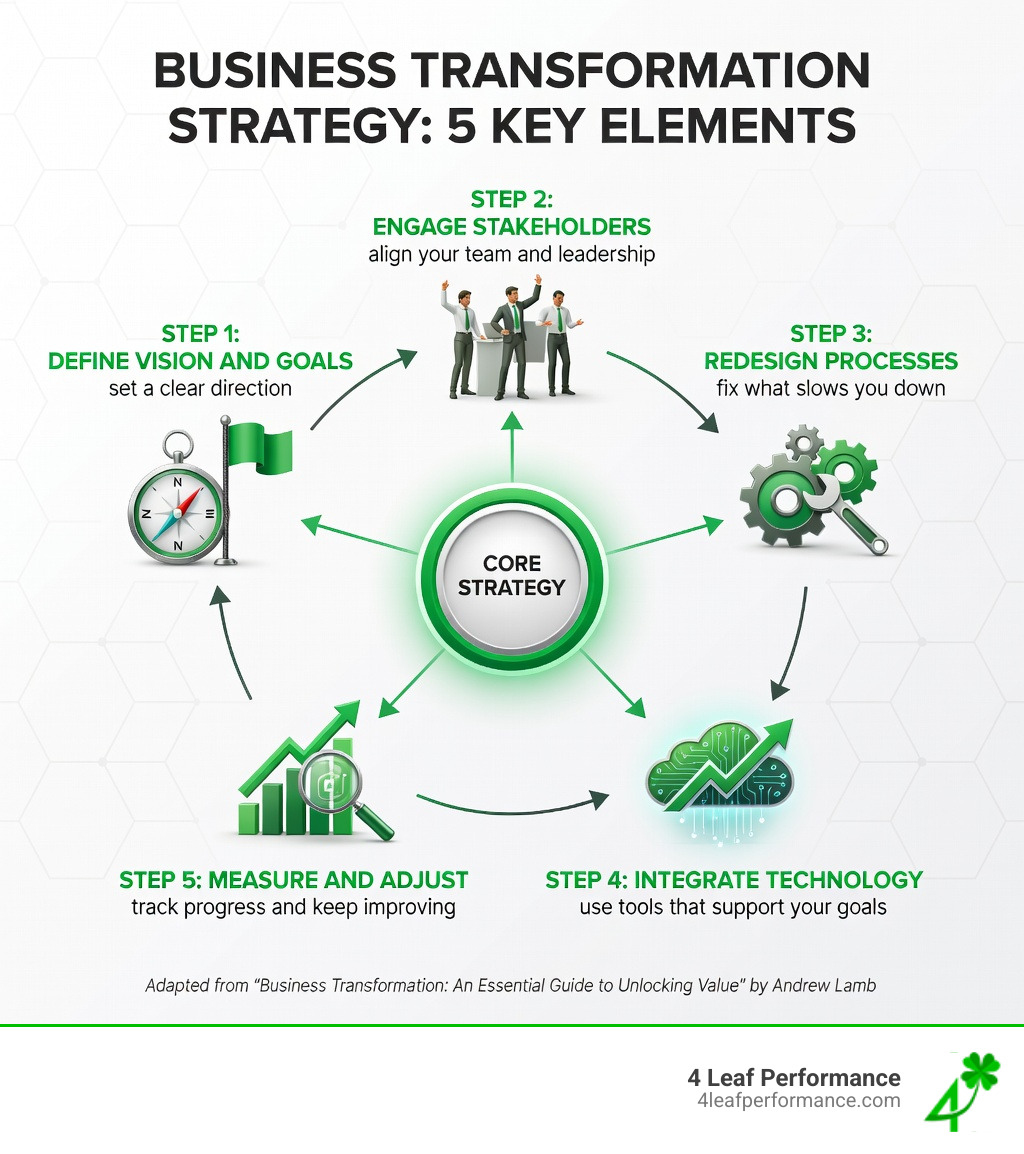
Changing a business is like climbing a staircase. You have to take it one step at a time.
- Define Vision: What does “winning” look like?
- Engage People: Tell your team why this matters.
- Redesign Processes: Look at your daily tasks and fix the ones that are broken.
- Tech Integration: Bring in the tools that help you do those tasks faster.
To see how to turn these big ideas into daily work, read from vision to action: How to translate business strategy into daily execution.
Old Habits vs. New Transformation Habits
| Old Habits | New Transformation Habits |
|---|---|
| Guessing what customers want | Using data to know what they want |
| Keeping information in “silos” | Sharing info across the whole team |
| Working harder to fix problems | Changing the system so problems don’t happen |
| Avoiding change because it’s scary | Embracing change to stay ahead |
Using Agile and Stage-Gate Methods
In a business transformation strategy, we don’t try to do everything at once. We use “Agile” methods to get quick wins. We also use “Stage-Gate” checks. This means we stop at certain milestones to make sure the plan is still working before we spend more money. It keeps the plan flexible.
Modern Business Transformation Strategy and AI
Today, AI is a huge part of transformation. Generative AI can help you write emails, analyze data, and make decisions much faster. Many companies are also using transformation to meet “ESG” goals. This stands for Environmental, Social, and Governance. It means making sure your business is good for the planet and the community while it grows.
Frequently Asked Questions about Business Transformation
What is the role of the CEO in transformation?
The CEO is the most important cheerleader. They must lead by example and show everyone that the change is important. If the CEO doesn’t care, the team won’t either. They also make sure the team has the money and tools they need to get the job done.
How long does a business transformation take?
Most companies start seeing big results in the first 12 months. However, real transformation is never truly “finished.” The market keeps moving, so your business has to keep evolving to stay on top.
Why do I need a Transformation Office?
Think of a Transformation Office like a coach for a sports team. They don’t play the game, but they keep track of the score, watch the clock, and make sure everyone knows the plays. They help keep the project from getting messy or going over budget.
Conclusion
At 4 Leaf Performance, we know that growth should not cost your sanity. We use our 25 years of experience and the WHY.OS framework to help you find the hidden profits already sitting inside your business.
Our Profit Accelerator program is built to help you lead better and profit smarter. We provide the systems and accountability you need to replace chaos with predictable operations. Don’t spend another year working long hours for tight margins. Start Your Profit Accelerator today and see your numbers differently. Together, we can build a business that grows without consuming your life.