What is Team Coaching and Why Does It Matter?
Team coaching is a structured process where a coach works with an entire team to improve how they work together, align on shared goals, and perform at their best — not just as individuals, but as a unit.
Quick answer: What is team coaching?
- What it is: A coach works with a whole team over time to improve communication, trust, and results
- Who it’s for: Intact teams with shared goals — leadership teams, project teams, cross-functional groups
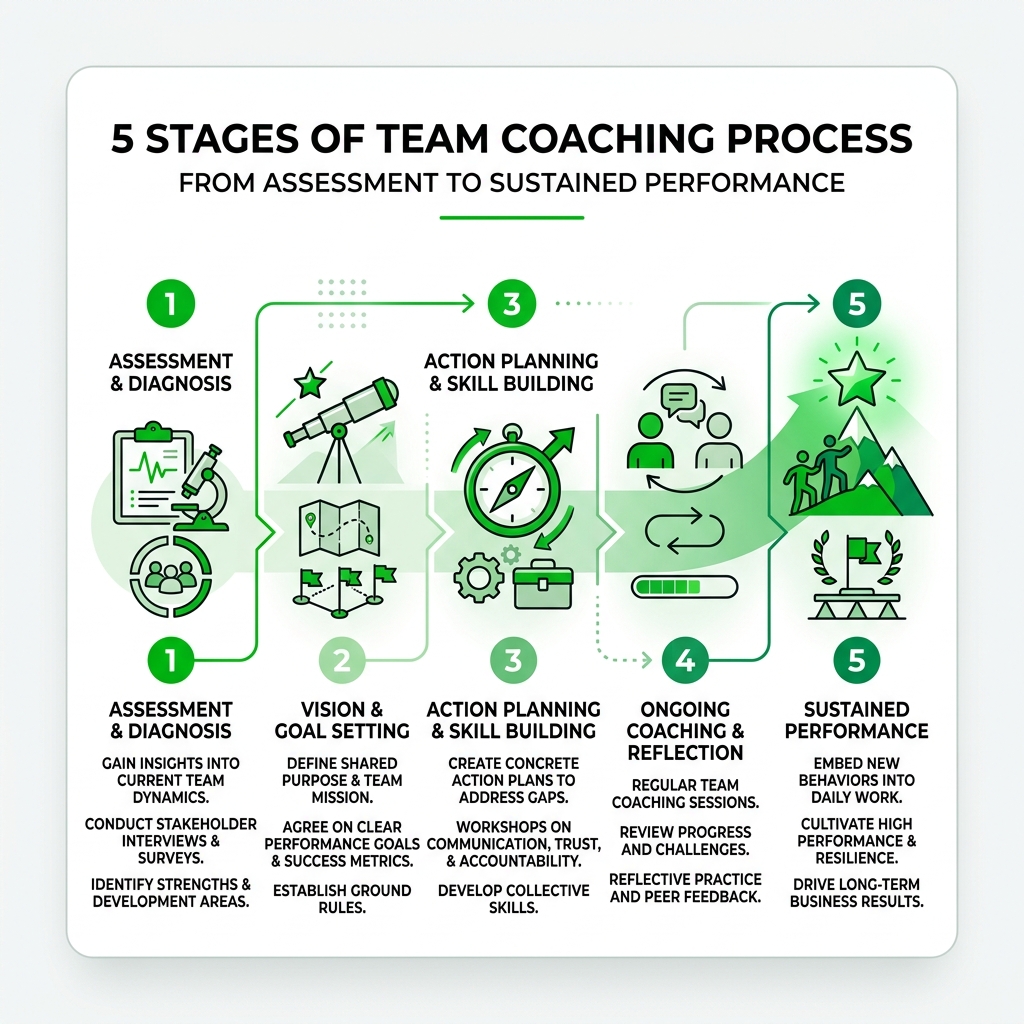
- How it works: Assessment → goal setting → regular sessions → progress tracking
- How long it takes: Typically 6–18 months for lasting change
- Key outcomes: Psychological safety, shared purpose, mutual accountability, better performance
Teams are the engine of every business. But most teams don’t reach their potential — not because people lack talent, but because how they work together gets in the way.
Collaboration demands have surged by over 50% in recent years. Yet many teams still struggle with poor communication, low trust, and unclear direction. The result? Burned-out leaders, missed goals, and wasted potential.
That gap is exactly what team coaching is built to close.
I’m Andrew Lamb — leadership advisor, executive coach, and founder of 4 Leaf Performance, with over 25 years leading global teams at organizations like HP. I’ve seen how team coaching transforms struggling groups into aligned, high-performing units. In this guide, I’ll walk you through everything you need to know to make it work for your team.

At its heart, team coaching is about helping a group of people become a true “team.” Many groups in offices are just people who work in the same room. They have different goals. They don’t always help each other. Team coaching changes that. It focuses on the collective development of the whole group.
Think of a sports team. A great coach doesn’t just teach the kicker how to kick. They teach the whole team how to move together to win the game. In business, this means creating lasting change in how people talk, think, and solve problems.
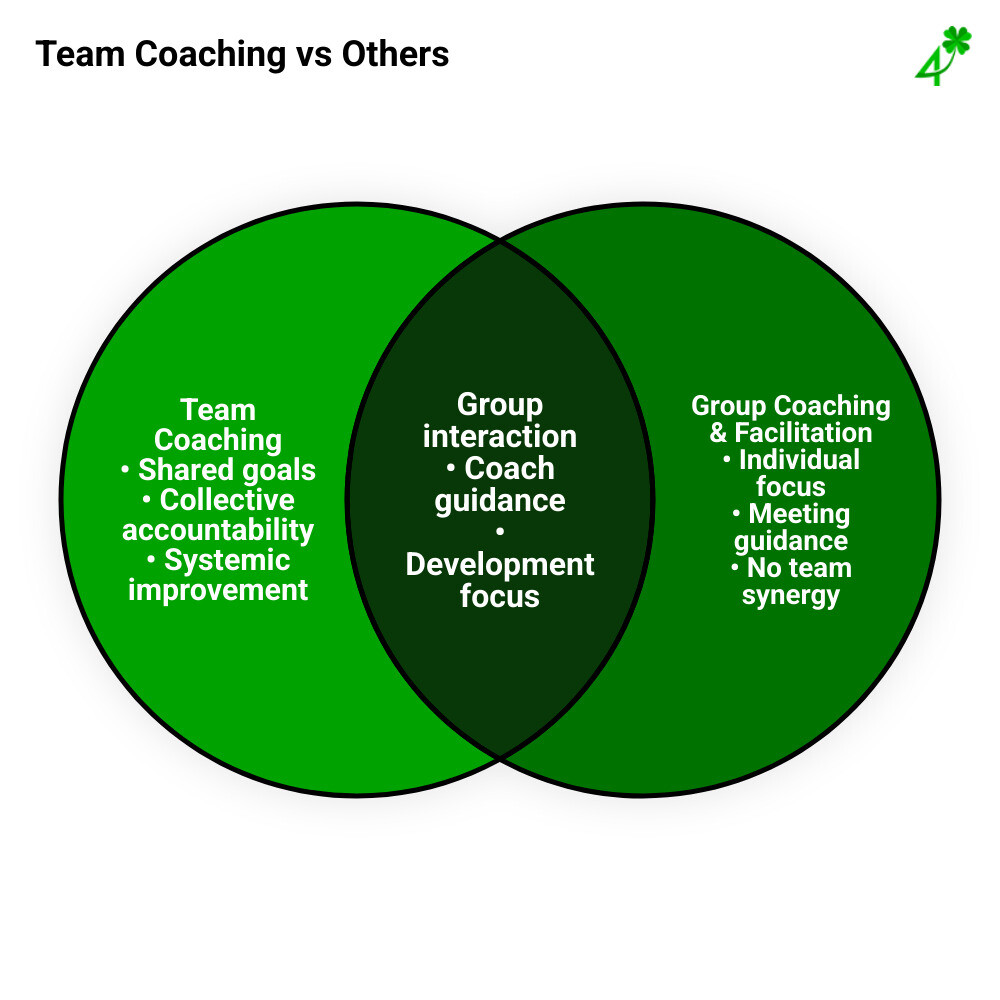
It is important to know that team coaching is not the same as other types of help. Here is a simple way to see the differences:
When we use team coaching, we aren’t just fixing a one-time problem. We are building the team’s ability to fix their own problems in the future. This is a big part of the definitive guide to team performance improvement. It moves the team from just “getting by” to “soaring together.”
The Core Benefits of Team Coaching for Your Business
Why should you spend time and money on this? Because the results are real. Research shows that 2/3 of the Fortune 1000 companies have used team coaching to get ahead. Here are the big wins you can expect:
1. Psychological Safety
This is a fancy way of saying people feel safe to speak up. In a safe team, you can admit a mistake or share a wild idea without being teased. This is the foundation of every high-performing team. Without it, people hide the truth, and the business suffers.
2. Mutual Accountability
In most groups, only the boss holds people accountable. In a coached team, everyone holds each other accountable. If someone is falling behind, the team steps in to help because they all care about the shared goal. This is a huge part of team cohesion: reducing conflict and boosting efficiency.
3. Shared Purpose
Does everyone on your team know why they are doing the work? Team coaching helps the group find their “North Star.” When everyone points in the same direction, you stop wasting energy on things that don’t matter.
We also use tools to understand how people think. For example, how to build a high-performing team using the DISC framework helps us see who likes to lead and who likes to plan. When you know your teammates’ styles, you stop getting annoyed and start working together. If you want to dive deeper into this for your leaders, check out everything you need to know about executive coaching for teams.
Key Techniques and Frameworks in Team Coaching
How do we actually do it? We don’t just sit in a circle and talk about feelings. We use proven frameworks. One big one is the “Solution-Focused” approach. This means we don’t spend all day talking about what is broken. Instead, we look at where the team wants to go and find the fastest way to get there.
Another key is “Systemic Awareness.” This means looking at the team as a living system. We look at how the team fits into the whole company. We ask: “How does our work help our customers?” or “How does the market change how we should talk to each other?”
Using DISC and WHY.OS in Team Coaching
At 4 Leaf Performance, we love using personality and purpose tests.
- DISC: This helps us see communication styles. Some people are fast and bold. Others are quiet and careful. Using DISC team building to hire, lead, and grow more effectively shows you how to put the right people in the right seats.
- WHY.OS: This is our secret sauce. It helps every person find their “Why.” When a team understands each other’s “Why,” they “click” in a way they never have before. Want a team that just clicks? Start with DISC and WHY.OS to build that bond.
Applying Proven Coaching Frameworks
We also use the ICF (International Coaching Federation) competencies. These are like the “rules of the road” for great coaches. They include things like:
- Creating Agreements: Making sure everyone knows what the coaching is for.
- Building Trust: Helping the team feel like the coach is in their corner.
- Listening Beyond Words: Noticing the “vibe” of the room, not just the words being said.
These tools work even if your team isn’t in the same office. Virtual team coaching: unlocking remote potential one challenge at a time is becoming very popular as more people work from home.
Internal vs. External Team Coaching: Choosing Your Path
Should you use a leader from inside your company to coach, or hire someone from the outside? Both have pros and cons.
Internal Coaching (A leader from your company):
- Pros: They know the business. They know the tasks. They are already there.
- Cons: It can be hard to be honest with a boss. There might be “office politics” involved.
- Best for: Small, task-focused teams where the leader has been trained in coaching skills.
External Coaching (A pro from outside):
- Pros: They are objective. They don’t take sides. They provide a “safe space” for hard talks.
- Cons: They cost more and need time to learn about your business.
- Best for: Executive teams, teams in big conflict, or when you are going through a huge change.
Regardless of which you choose, you need a monthly business coaching rhythm to keep the momentum going. If you want to train your own leaders to be better coaches, you can help them lead the way: unlocking your team’s full potential.
Overcoming Challenges and Building a High-Performing Culture
Team coaching isn’t always easy. Sometimes people don’t want to change. Sometimes there is a lot of old anger in the room. A good coach knows how to handle these “knotty” issues.
A challenge is “Silos.” This is when different departments don’t talk to each other. They act like they are on different teams. Team coaching breaks these walls down. It helps everyone see that if the company wins, they all win.
To build a great culture, we often use workshops. You can see how different ones work by looking at the 5 best leadership team workshops compared. One of the best ways to start is to run team purpose workshops in 7 easy steps. This gives the team a quick win and shows them that coaching can be fun and helpful.
Frequently Asked Questions about Team Coaching
What is the difference between group and team coaching?
Group coaching is for people who want to work on their own goals with others around them. Team coaching is for a “real team” that has to reach a goal together. If the people don’t need each other to succeed, it’s group coaching. If they do, it’s team coaching.
How long does a typical team coaching program last?
Real change takes time. Most programs last between 6 and 18 months. You might have a big meeting once a month, with shorter “check-ins” in between. This helps the new habits stick.
Can team coaching help remote or virtual teams?
Yes! In fact, remote teams often need it more. Without “water cooler talk,” it’s easy for remote workers to feel lonely or confused. Coaching helps them stay connected and aligned through video calls and digital tools.
Conclusion
At 4 Leaf Performance, we believe that “Lead Better. Profit Smarter.” is more than a tagline. It is a practical way to help leaders and teams work with more clarity, focus, and results. When you invest in team coaching, you invest in the heart of your business. You choose to reduce chaos and lead with intention.
We bring 25 years of global executive experience and the WHY.OS framework to help teams uncover hidden potential, align around purpose, and perform better together. You do not have to spend another year guessing what to do next or working long hours for the same old results.
Ready to help your team work better together? Start Your Profit Accelerator today and take the next step toward a more aligned, high-performing team.