Why is Team Alignment Crucial for Houston Executives in May 2026?
Houston’s dynamic business landscape, home to over 20 Fortune 500 company headquarters, demands exceptional leadership and highly aligned teams. In sectors like energy, healthcare, and technology, unaligned teams can lead to significant operational inefficiencies, project delays, and a failure to capitalize on market opportunities. The cost of misalignment is not merely financial; it impacts employee morale, increases turnover, and can leave leaders feeling stuck in a cycle of long hours and tight margins.
The competitive environment in Houston, coupled with its diverse and rapidly evolving industries, amplifies the need for cohesive teams. For instance, in the energy sector, complex billion-dollar projects require seamless collaboration and clear communication across multiple departments and international partners. A lack of alignment can derail these initiatives, leading to substantial financial losses and reputational damage. Similarly, in healthcare, where patient outcomes and regulatory compliance are paramount, misaligned teams can compromise care quality and operational efficiency. The tech industry, characterized by rapid innovation, relies on agile, aligned teams to bring new products to market quickly and effectively.
Research indicates that organizations with strong team alignment consistently outperform their peers. For executives, this means not only achieving strategic goals but also fostering a resilient and adaptable workforce. Investing in team alignment coaching is a strategic imperative for sustained growth and competitive advantage, enabling leaders to lead better and systemize smarter. Without this focus, Houston executives risk falling behind in a market that rewards agility and collaboration.
What Methodologies Do Top Leadership Coaches Use to Foster Team Alignment?
Top leadership coaches employ a range of sophisticated methodologies to diagnose and resolve team alignment issues, moving beyond generic advice to deliver actionable strategies. These approaches often begin with comprehensive assessments to understand individual and team dynamics, such as DISC, Enneagram, Hogan, EQ-i 2.0, or 5 Voices. These tools provide data-driven insights into personality traits, communication styles, and motivational drivers, forming a critical foundation for targeted interventions. For example, understanding team members’ DISC profiles can help leaders better aligning team roles with DISC profiles for maximum productivity.
Coaches then facilitate strategic workshops to define shared vision, mission, and values, ensuring every team member understands their role in achieving collective goals. These sessions are designed to foster a sense of collective ownership and purpose, moving teams from mere execution to inspired collaboration. Communication frameworks are introduced to improve clarity, feedback, and constructive conflict resolution, transforming potential disagreements into opportunities for growth.
A unique approach, like our proprietary WHY.OS framework, helps teams uncover their collective purpose, driving deeper engagement and sustained performance. This framework ensures that alignment is not just about tasks, but about a shared sense of meaning and direction, creating a powerful unifying force. By understanding the why behind their work, teams can navigate challenges with greater resilience and commitment. This human-centered approach emphasizes the importance of self-aware leaders and human factors in team dynamics. These methodologies are integral to our leadership coaching programs and are crucial for executive coaching for teams seeking lasting results.
What Credentials and Experience Should Executives Look for in a Team Alignment Coach?
When selecting a leadership coach for team alignment, executives should prioritize a blend of extensive experience, recognized credentials, and a proven track record. Look for coaches with significant executive-level experience, ideally 20 or more years, including global projects, which demonstrates an understanding of complex organizational dynamics. This kind of real-world, front-line experience ensures that coaches understand the practical challenges executives face.
Certifications from reputable bodies like the International Coaching Federation (ICF PCC) or relevant HR credentials (SHRM, HRCI) indicate adherence to professional standards and ethical guidelines. These credentials provide assurance that the coach has undergone rigorous training and adheres to best practices in the field.
A coach’s ability to integrate inner work, such as mindset and emotional intelligence, with tangible skill-building is crucial for holistic development. This recognizes that a leader’s personal development directly impacts team psychological safety. Furthermore, a strong emphasis on measurable results and return on investment (ROI) ensures that the coaching engagement delivers concrete value. We believe that ROI on executive coaching does leadership mentoring work by focusing on tangible outcomes. This comprehensive approach to mastering executive leadership development ensures that leaders are equipped not just with new skills, but with a transformed mindset capable of driving lasting team alignment.

How Do Coaching Programs Address Specific Team Alignment Challenges?
Effective team alignment coaching programs are designed to tackle common challenges head-on, transforming dysfunctional dynamics into collaborative strengths. We understand that growth should not cost your sanity, and our programs aim to create clarity and structure.
Addressing Communication Breakdowns
Coaches implement structured feedback models, active listening training, and strategies to foster psychological safety, ensuring team members feel heard and understood. This includes teaching leaders to communicate with simplicity despite appreciating complexity. Our programs help leaders develop the executive presence to be seen as trusted, capable, and influential, fostering an environment where critical feedback is received well.
Clarifying Roles and Responsibilities
Workshops are facilitated to define clear accountabilities, reduce overlap, and optimize workflows, leading to greater efficiency and less confusion. This involves helping teams establish common goals and ensuring follow-through on decisions, which is essential for effective team development. Our leadership team workshops are specifically designed to address these areas.
Building Shared Vision and Goals
Through facilitated sessions, teams co-create strategic objectives and ensure collective buy-in, aligning individual efforts with overarching organizational aims. This process often involves leveraging frameworks like our WHY.OS to uncover a deeper, shared purpose, making goals more meaningful and motivating. This leads to teams that are not only aligned but also deeply committed.
Resolving Conflict and Building Trust
Coaches introduce techniques for constructive conflict resolution, team-building exercises, and strategies to foster empathy, strengthening interpersonal bonds. This moves teams away from avoiding conflict to engaging in healthy, productive discussions that build stronger relationships and better outcomes. Influential leadership is about motivating the team to celebrate results together, not dictating actions, requiring empathy and curiosity.
Developing Coaching-Centered Leaders
Executives are trained to empower their teams, delegate effectively, and foster ownership, cultivating a culture where leaders inspire rather than dictate. This approach focuses on transforming managers into coaches who build leaders, leading to stronger retention and more committed, higher-performing teams. This approach aligns with our philosophy that structure creates freedom and empowers leaders to stop working in their business and start leading it. For a deeper dive into these strategies, explore the 5 best leadership team workshops compared.
How Can Executives Evaluate and Select the Right Team Alignment Coach?
Choosing the right coach is a critical decision that impacts your team’s future performance. Begin by clearly defining your team’s specific needs and desired outcomes. Are you struggling with communication, role clarity, or a lack of shared vision? Pinpointing these challenges will help you identify coaches with relevant expertise.
Look for a coach who offers a proven methodology, such as our WHY.OS framework, which provides a structured path to understanding purpose and driving alignment. This framework moves beyond surface-level issues to address the core drivers of team cohesion, ensuring that alignment is deeply embedded and sustainable. Holistic views of business health must include team dynamics to be effective.
Assess chemistry and fit during initial consultations, as a strong rapport is essential for effective coaching. A coach should be someone who provides neutral, candid, high-quality feedback and embodies what they teach, creating a safe space for growth and challenge. Inquire about customization options, program duration, and delivery formats, such as in-person or virtual, to ensure the program integrates seamlessly with your operations.
Prioritize coaches who emphasize accountability and measurable progress, ensuring your investment yields tangible results. Ask about their approach to tracking success metrics, such as improved communication scores, project completion rates, or employee engagement. A coach with global executive experience and a results-focused approach can provide invaluable insights for senior leaders, helping them navigate complex challenges with confidence and clarity. The goal is to find a partner who can help you achieve effective leadership coaching and prove that is executive coaching worth it unpacking the power of transformational leadership.

What Results Can Executives Expect from Investing in Team Alignment Coaching?
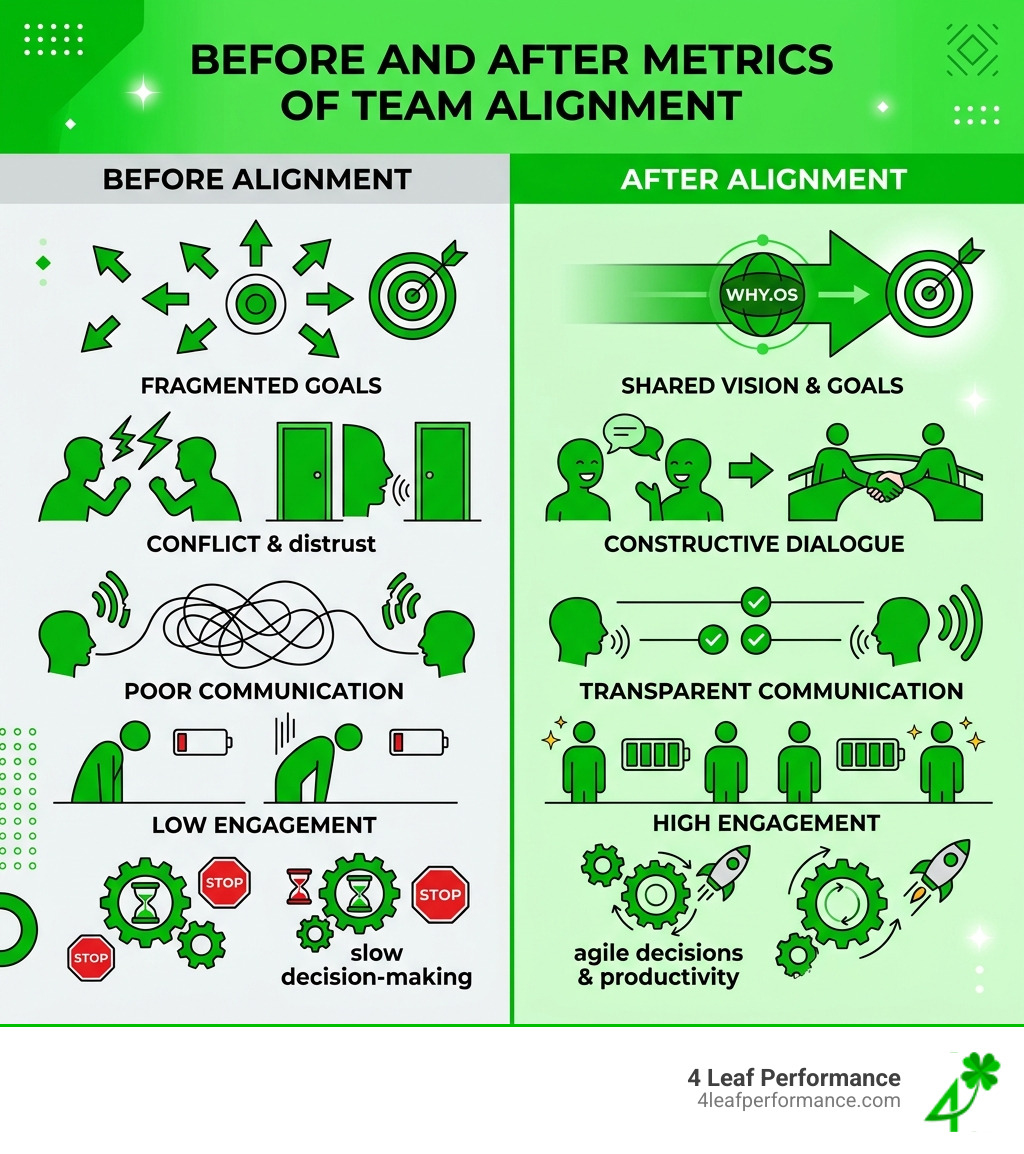
Investing in expert leadership coaching for team alignment yields significant, measurable results that directly impact an organization’s bottom line and culture. Executives can expect to see improved communication and collaboration across all levels, leading to more efficient workflows and faster project completion. This translates into increased productivity and efficiency, as teams work cohesively towards shared objectives, minimizing wasted effort and maximizing output.
Furthermore, aligned teams experience higher employee engagement and retention, reducing the costs associated with turnover and fostering a more stable, motivated workforce. When team members feel connected to a shared purpose and understand their value, they are more likely to remain committed and perform at their best. Effective coaching models lead to stronger retention, with leaders who coach retaining more committed, higher-performing teams through improved alignment.
Decision-making becomes more agile, and problem-solving more effective, as diverse perspectives are integrated constructively rather than leading to friction. This allows organizations to adapt more quickly to market changes and capitalize on new opportunities. Leaders gain enhanced effectiveness and strategic clarity, leading to a business that grows without consuming their lives. This comprehensive development, detailed in our mastering leadership competencies for executive impact guide, empowers executives to lead with intention, not reaction. The investment in team alignment coaching creates a foundation for sustainable success, allowing leaders to achieve profit freedom through clarity and build a resilient organization. For a comprehensive understanding of leadership development, refer to our detailed guide to leadership development.
Frequently Asked Questions about Team Alignment Coaching
What is the typical duration of a team alignment coaching program?
The duration of a team alignment coaching program varies based on the team’s specific needs and the complexity of the challenges. Programs can range from intensive workshops over a few days to comprehensive engagements spanning several months, often with ongoing follow-up sessions to ensure sustained impact. Many clients choose to continue for longer periods to ensure sustained growth.
Can team alignment coaching be delivered virtually for Houston-based teams?
Yes, many top-rated leadership coaches offer flexible delivery options, including virtual coaching sessions and workshops. This allows Houston-based executives to access expert guidance regardless of their team’s location or scheduling constraints, ensuring continuity and convenience. This flexibility is particularly valuable for geographically dispersed teams or those with demanding schedules.
How does team alignment coaching differ from general leadership development?
While general leadership development focuses on individual leader capabilities, team alignment coaching specifically targets the collective dynamics, communication, and shared objectives of an entire team. It aims to optimize how team members interact and work together to achieve common goals, directly addressing inter-team effectiveness. It is about ensuring that the entire unit is working synergistically, rather than just developing individual leadership skills in isolation.
Conclusion
For Houston executives navigating a complex and competitive landscape, investing in top-tier leadership development coaching for team alignment is not merely an expense, but a strategic investment in future success. By fostering cohesive, purpose-driven teams, leaders can unlock hidden potential, drive innovation, and achieve sustainable growth. “Profit freedom starts with clarity,” and “growth should not cost your sanity.” Partnering with the right coach can transform your team’s dynamics, leading to unparalleled performance and a more fulfilling leadership journey. We are here to help you “lead better, systemize smarter, and find the hidden profits already sitting inside your business.”