Why Developing Leaders in the Workplace Can’t Wait
Developing leaders in the workplace is one of the highest-leverage moves any organization can make. Here’s what it means in practice:
How to develop leaders in the workplace:
- Identify high-potential employees early using tools like 360-degree feedback and performance data
- Build tiered development pathways tailored to frontline, mid-level, and senior leaders
- Use mentoring and stretch assignments to grow skills through real experience
- Lead with strengths rather than focusing only on fixing weaknesses
- Measure results through engagement scores, retention rates, and business outcomes
- Embed emotional intelligence into coaching, feedback, and promotion criteria
Think about this for a second.
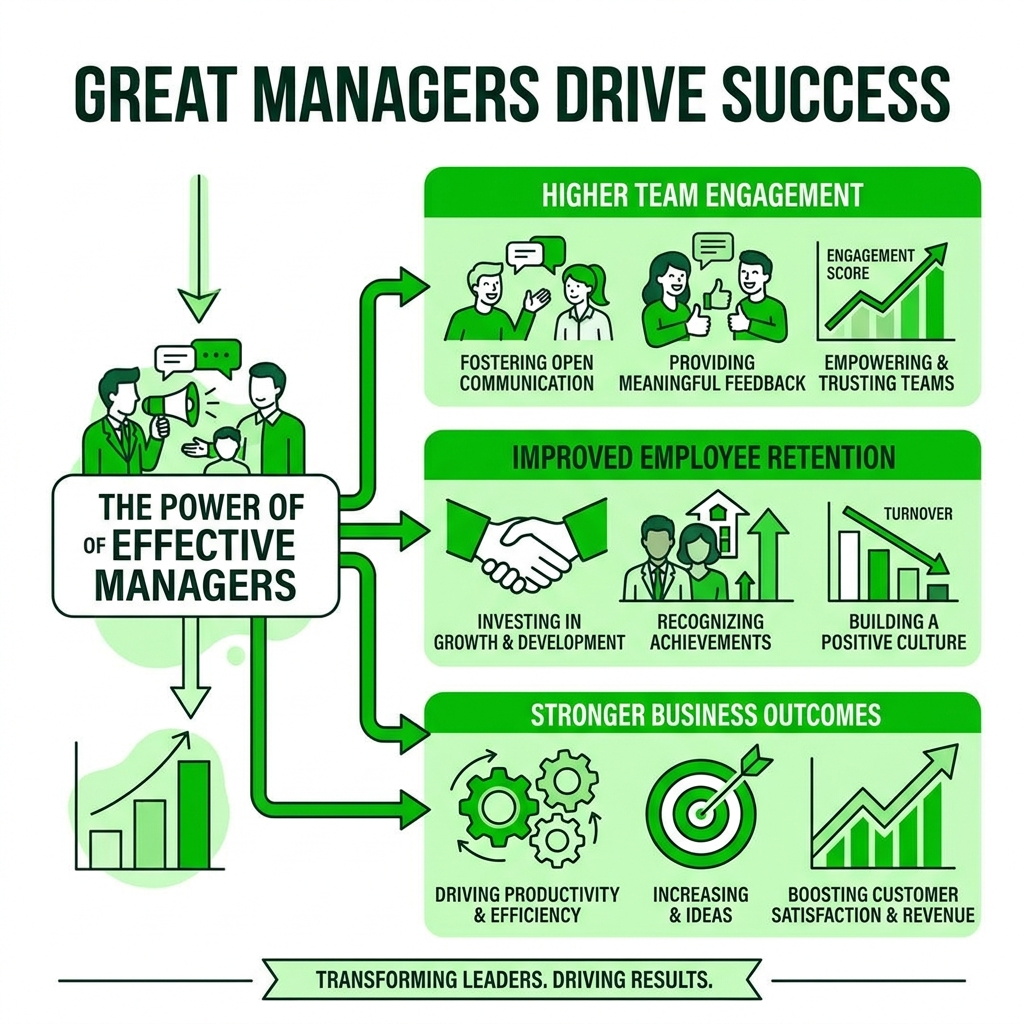
Gallup research shows that 70% of the variance in team engagement comes down to one thing: the manager. Not the strategy. Not the product. The person leading the team.
Yet most organizations either skip leadership development entirely or treat it as a one-time training event. The result? Teams that are disengaged, strategies that never get executed, and good employees who walk out the door.
Here’s the hard truth: if your leaders aren’t growing, your business isn’t either.
The good news is that leadership is a skill. It can be learned, practiced, and developed — at every level of your organization.
I’m Andrew Lamb, a leadership advisor and executive coach with over 25 years of senior global leadership experience, including two decades at HP, where I saw how the right investment in developing leaders in the workplace separates thriving organizations from ones that quietly stall. That experience is the foundation behind everything we do at 4 Leaf Performance — and this guide will walk you through exactly how to build a leadership development approach that actually works.
Why Developing Leaders in the Workplace is Your Best Move
In our 25 years of global executive experience, we have seen that a business is only as strong as its leaders. When you focus on developing leaders in the workplace, you aren’t just teaching people how to give orders. You are building the engine that drives your company forward.
Research shows that between 67% and 90% of business strategies fail because they aren’t executed well. Why does this happen? Usually, it is because the managers on the ground don’t have the skills to lead their teams through the plan. A great leader bridges the gap between a big idea and real-world results.
When leaders are good at their jobs, employees are happier. They stay at the company longer and work harder. In fact, teams with great managers see 20% to 25% higher engagement. This isn’t just a “nice to have” — it is a business imperative. You can learn more about how this works in this Toolkit: Developing Organizational Leaders.
Investing in your people also saves money. It costs a lot to hire and train someone new. By growing your own leaders, you keep your best talent. Check out our thoughts on the ROI on executive coaching to see how these programs pay for themselves.
Identifying High-Potential Talent for Developing Leaders in the Workplace
How do you know who will be a great leader? You shouldn’t just wait for someone to ask for a promotion. You need to look for “high-potential” talent early. These are the people who have the drive and the “knack” for helping others.
One great tool is the 9-box grid. It helps you look at an employee’s current performance and their future potential at the same time. We also suggest using 360-degree feedback. This is where a person gets feedback from their boss, their peers, and the people they help every day.
Early identification means you can start training them before they even have a big title. This makes the transition to management much smoother. For more help on this, see The ultimate guide to leadership assessment tools.
The Cost of Poor Leadership
We have all heard the saying: “People don’t quit jobs; they quit bosses.” It is true. Employees who have managers with low emotional intelligence are four times more likely to leave.
Poor leadership leads to:
- High turnover (people leaving)
- Low morale (people feeling sad or bored)
- Missed goals (the business failing to grow)
When a leader struggles, the whole team suffers. They might stop sharing ideas or start doing the bare minimum. You can spot these issues by looking at 12 common leadership weaknesses and how to improve them.
Core Skills for the Future Leader
The world is changing fast, especially with things like AI. Leaders today need more than just “hard skills” like knowing how to use a computer or balance a budget. They need “soft skills.”
The top skill executives look for today is adaptability. A leader needs to be able to change plans when things get tricky. Another huge skill is emotional intelligence (EQ). This means understanding your own feelings and the feelings of others. When a leader has high EQ, their team is more productive and less stressed.
Interpersonal skills like active listening and empathy are what build loyalty. People don’t follow leaders because they have to; they follow them because they trust them. Read more about these modern leadership qualities shaping success in 2024. upgrading your leadership skills is a lifelong journey.
Using Strengths for Developing Leaders in the Workplace
At 4 Leaf Performance, we believe in leading with strengths. Many people think leadership training is about fixing what is “wrong” with you. We think that is backwards.
When people use their natural talents, they are six times more likely to be engaged at work. We use tools like CliftonStrengths and the WHY.OS framework to help leaders find their “why.” When you know why you do what you do, you become an authentic leader.
Instead of trying to make a quiet person loud, help them lead with their great listening skills. Instead of forcing a dreamer to be a data expert, pair them with someone who loves numbers. This is how you build a winning team. You can lead better by knowing your DISC and seeing how self-aware leadership wins.
Practical Ways to Grow Your Team

Training doesn’t just happen in a classroom. In fact, most people learn best by doing. Here are three powerful ways to grow your team:
- Mentoring: This is when a senior leader shares their wisdom with someone newer. It isn’t just about teaching skills; it is about teaching a mindset.
- Stretch Assignments: Give someone a project that is a little bit harder than what they usually do. It might be leading a new committee or helping a different department. This builds confidence.
- Leading by Example: This is the most important one. If you want your team to be honest and hard-working, you have to be honest and hard-working first. Your actions give your words credibility.
Check out our guide on leading by example and explore the definitive guide to leadership coaching programs for more ideas.
Creating Safe Spaces for Learning
People are afraid to lead if they are afraid to fail. To help people grow, you must create psychological safety. This means it is okay to make a mistake as long as you learn from it.
Encourage “feedback loops” where people can talk openly about what is working and what isn’t. Peer networks are also great. When new leaders can talk to each other, they realize they aren’t alone in their struggles. This kind of authentic leadership training helps everyone grow together.
Building a Winning Leadership Strategy
A good strategy for developing leaders in the workplace must match your business goals. If your goal is to grow fast, you need leaders who are great at hiring and building teams. If your goal is to save money, you need leaders who are great at systems and efficiency.
You also need “tiered pathways.” This means the training for a first-time manager should be different from the training for a CEO.
- Frontline Leaders: Focus on basic management, giving feedback, and communication.
- Mid-Level Managers: Focus on strategy, coaching others, and managing culture.
- Executives: Focus on vision, change management, and high-level decision making.
You can dive deeper into mastering executive leadership development or learn how to create a leadership development program that works.
Supporting Every Level of Management
Middle managers are the “bridge” of your company. they take the big goals from the top and turn them into tasks for the frontline. This is a hard job! They need a lot of support.
Good communication is the secret sauce here. Leaders must learn how to talk to all kinds of people. We offer a comprehensive guide to leadership communication to help with this. Also, don’t forget the power of team coaching. See everything you need to know about executive coaching for teams to see how groups can grow together.
Measuring Success and Avoiding Mistakes
How do you know if your program is working? You have to look at the numbers. Don’t just count how many people finished a class. Look for real change.
Key things to track:
- Retention Rates: Are fewer people quitting?
- Engagement Scores: Do employees feel more excited about their work?
- Productivity: Is the team getting more done?
- Promotion Rates: Are you able to fill open jobs with people already at your company?
The 2024 Global Leadership Development Study shows that many companies forget to measure these things. Don’t be one of them! You can also ask, is executive coaching worth it? to see the long-term value.
Common Pitfalls to Avoid
We have seen many companies make the same mistakes. Here is how to avoid them:
- Generic Training: Don’t use a “one-size-fits-all” program. Make it fit your company’s needs.
- Lack of Support: If the CEO doesn’t care about the program, no one else will either.
- Ignoring Diversity: Make sure everyone has a chance to lead, no matter their background.
- Legal Compliance: Ensure your programs are fair and follow all laws.
Focusing on mastering leadership competencies helps you avoid these traps.
Frequently Asked Questions about Leadership Development
How do we measure the ROI of leadership programs?
ROI means “Return on Investment.” You measure it by looking at business metrics like profit growth and cost savings from lower turnover. If your leaders are better, your teams work faster and make fewer mistakes, which saves money.
What are the best ways to identify future leaders?
Look for people who naturally help others. Use performance data, 360-degree feedback, and personality tests like DISC. Give them a “stretch assignment” (a small, hard project) and see how they handle it.
How is AI changing leadership development?
AI can help create personalized learning paths for every leader. It can also give automated feedback on things like writing or scheduling. However, AI cannot replace the “human” parts of leadership, like empathy and building trust.
Conclusion
Developing leaders in the workplace is the best way to ensure your company’s future. It turns a chaotic business into a smooth-running machine. At 4 Leaf Performance, we use our WHY.OS framework and 25 years of experience to help you find the hidden profits in your business by building better leaders.
Stop working in your business and start leading it. Growth should not cost your sanity. We offer affordable, actionable, and accountable coaching to help you scale without the burnout.
Ready to start your leadership revolution? Start your leadership journey with our workshops today and see the difference that real leadership can make. Lead Better. Profit Smarter.